
Blog
Insights, stories, and resources about concussion awareness, prevention, and recovery.
Blog
Insights, stories, and resources about concussion awareness, prevention, and recovery
Blog
Insights, stories, and resources about concussion awareness, prevention, and recovery
Recent Blogs
Uncategorized
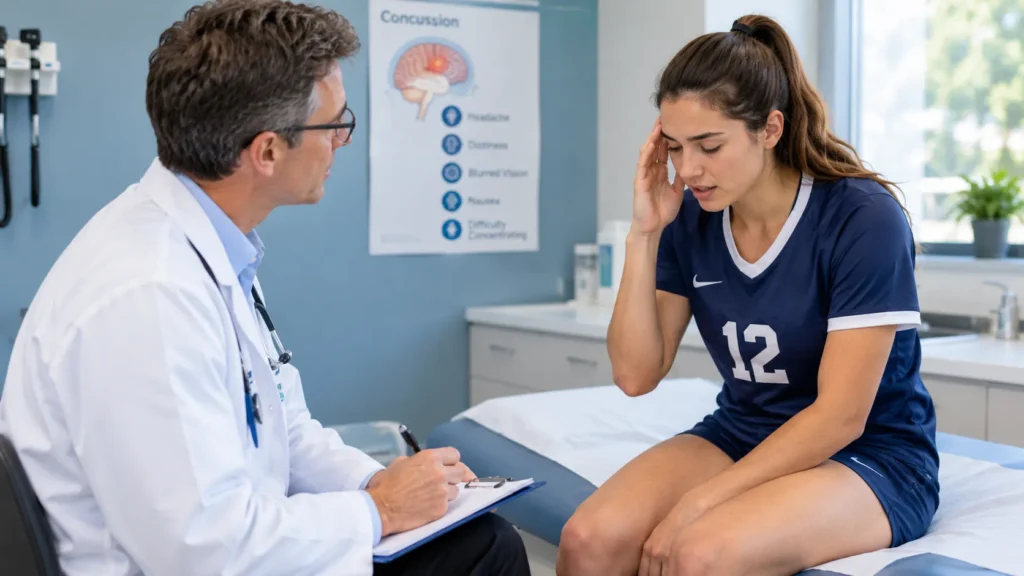
Beyond the Injury: Why Concussion Symptoms Often Go Unreported — March 2026
March 2026
When we think about concussions, we often picture an athlete taking a hard hit, falling to the ground, or being helped off the field. However, many concussions are much less obvious. An
athlete might experience a headache, dizziness, or difficulty concentrating and continue playing without telling anyone. In some cases, they might not even realize that what they are
experiencing could be a concussion.
One of the biggest challenges in concussion prevention is not simply recognizing when an injury occurs, but understanding why people sometimes hesitate to report their symptoms.
For young athletes, sports are often much more than a physical activity. They are an important part of their friendships, routines, and identities. The thought of missing a game, disappointing teammates, or losing a starting position can make speaking up especially difficult. Some athletes may also believe that their symptoms are not serious enough to warrant medical attention, particularly if they did not lose consciousness.
This is why concussion education needs to begin long before an injury occurs.
Through my work with Concussion Superstars, I have become increasingly interested in the gap between concussion awareness and the decisions people make when they experience an injury. Knowing that concussions can be serious does not necessarily mean someone will recognize their own symptoms or feel comfortable reporting them.
My concussion awareness research among young adults has reinforced the importance of this issue. Many participants described limited concussion knowledge before experiencing an injury, while others reported delays in seeking medical evaluation. These findings raise an important question: How can we expect young people to respond appropriately to concussions if they have not received the information they need beforehand?
I believe part of the answer involves changing how we talk about brain injuries.
Athletes should understand that reporting symptoms is not a sign of weakness. Coaches can help by creating environments where speaking up is encouraged rather than discouraged.
Parents and educators can also reinforce the message that an athlete’s long-term health should always come before a single game or competition.
Importantly, anyone with a suspected concussion should be removed from play immediately and evaluated by a healthcare professional. An athlete should not return to sports on the same day as a suspected concussion.
Ultimately, concussion awareness is about more than knowing the symptoms. It is about creating an environment where young people feel comfortable recognizing those symptoms, discussing them openly, and seeking appropriate care.
At Concussion Superstars, my goal is to help make that kind of education more accessible so that young athletes and their families feel better prepared before an injury ever happens.
Learn more about concussion symptoms, prevention, and recovery through our educational resources.
Uncategorized
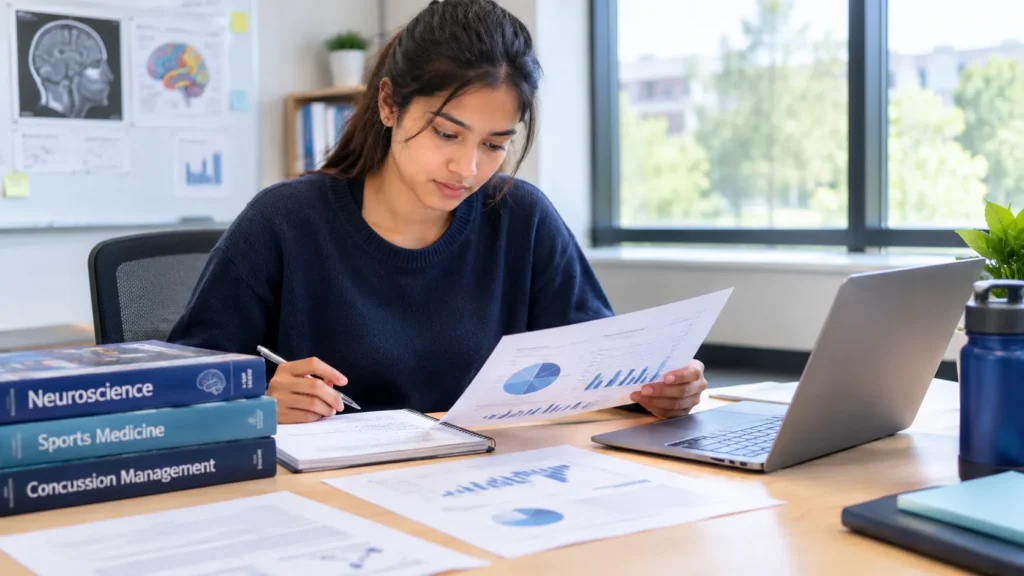
Sharing My Concussion Awareness Research: Highlights from Spring 2026
June 2026
This spring has been an especially meaningful time for me and Concussion Superstars. Over the past few months, I have had the opportunity to share my concussion awareness research at
several undergraduate and medical research conferences. Each presentation has given me the chance to discuss an issue that I have cared deeply about for years: the importance of
concussion education before an injury occurs.
My research, titled Concussion Awareness in Young Adults: A Pre- and Post-Injury Perspective, examines how young adults understand concussions before and after experiencing an injury, including their knowledge of symptoms and decisions about seeking medical care.
One of the most interesting findings was the difference between what participants knew before their concussion and what they learned afterward. Many participants reported having limited concussion knowledge before their injury, while a much larger proportion described their understanding as good or excellent afterward. The study also identified concerning delays in medical evaluation, with more than half of participants reporting that they waited longer than three days to seek care or did not seek medical attention at all.
For me, these findings reinforce something I have believed since starting Concussion Superstars: we should not have to experience a brain injury to understand how important brain
health is.
In April, I presented this research at the University of Virginia Undergraduate Research Symposium and the Cornell Undergraduate Psychology Conference. Both experiences gave me
the opportunity to discuss my findings with students, faculty, and researchers from different academic backgrounds.
In May, I presented at the UVA Brain Institute Symposium, where I was able to connect my interest in concussion education with broader conversations about neuroscience, brain injury,
and neurological health.
Most recently, in June, I was selected to give an oral presentation at the UVA Neurosurgery Research Symposium. This was particularly meaningful because it allowed me to communicate my research in a different format and discuss the importance of concussion awareness with an audience interested in neurological research and clinical care.
Although the settings of these conferences were different, one idea remained central to every presentation: education has the potential to influence how people recognize and respond to
concussions.
Presenting this work has also helped me appreciate the relationship between research and advocacy. Research allows us to identify gaps in knowledge and better understand patterns in
behavior. Advocacy gives us an opportunity to translate those findings into information that young people, parents, coaches, and communities can actually use.
I am grateful to my research mentors, Dr. Jose Posas and Dr. Donna Broshek, for their guidance and support throughout this project. Their mentorship has been incredibly valuable as I continue learning how to ask meaningful research questions and communicate scientific findings.
Looking back on this spring, I am especially encouraged by the conversations these presentations have created. What began as an interest in helping young athletes better
understand concussions has continued to grow into a larger commitment to neuroscience research, education, and community outreach.
My hope is that this research can contribute to a future in which concussion education happens before an injury, rather than becoming something people learn only through personal experience.
I look forward to continuing this work and sharing what comes next for Concussion Superstars.
Uncategorized
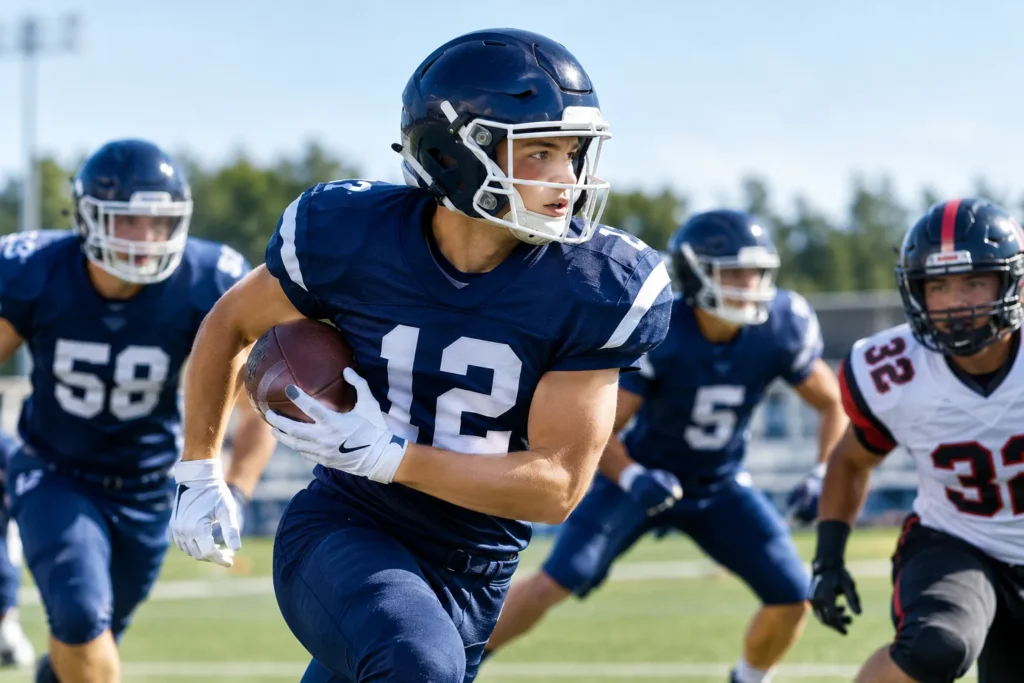
Football Season Is Back: What Every Athlete and Parent Should Know About Concussions
September 2026
As students return to school and football season begins, Friday night games, team practices, and school spirit become an exciting part of the fall. For many young athletes, football provides opportunities to build friendships, develop discipline, and learn the importance of teamwork. However, the beginning of a new sports season is also an important time to discuss concussion awareness and brain safety.
Football is a contact sport, and collisions are an unavoidable part of the game. While protective equipment, safety rules, and proper techniques can help reduce the risk of serious injuries, they cannot eliminate the possibility of a concussion.
One of the most common misconceptions about football is that wearing a helmet completely protects an athlete from a concussion. Helmets are essential for reducing the risk of certain
serious head injuries, but no helmet can prevent every concussion. A concussion can occur when a sudden impact causes the brain to move rapidly inside the skull, temporarily disrupting
normal brain function.
This is why concussion prevention requires more than protective equipment alone.
Recognizing the Signs of a Concussion
Concussions do not always involve losing consciousness. In fact, an athlete can remain awake, continue walking, and even insist that they feel fine while experiencing a concussion.
Common symptoms include headaches, dizziness, nausea, confusion, difficulty concentrating, sensitivity to light or noise, and unusual fatigue. Some symptoms appear immediately after an injury, while others develop over the following hours or days.
Parents, coaches, and teammates should pay attention to changes in an athlete’s behavior, balance, or ability to concentrate. An athlete who appears confused, moves unusually slowly, or
complains of symptoms after a collision should be evaluated for a possible concussion.
Why Playing Through an Injury Is Dangerous
One of the most important messages I hope young athletes understand is that continuing to play after a suspected concussion is never worth the risk.
Athletes sometimes feel pressure to stay in a game, especially during an important competition. They may worry about disappointing their teammates or losing playing time. However, returning to play before recovering can increase the risk of another concussion and potentially more serious injury.
If a concussion is suspected, the athlete should be removed from play immediately and evaluated by a healthcare professional. They should not return to sports that same day.
Recovery also requires patience. While many athletes improve within several weeks, everyone recovers differently. Returning to school and other everyday activities can often happen
gradually as symptoms improve, but returning to contact sports requires a structured process and medical clearance.
Creating a Culture of Brain Safety
Concussion prevention is not only the responsibility of athletes. Parents, coaches, athletic trainers, schools, and teammates all play an important role in creating a safer sports
environment.
Coaches can reinforce proper tackling techniques, discourage unnecessary head contact, and encourage athletes to report symptoms. Parents can talk with their children about concussion risks before the season begins. Teammates can support one another by recognizing that sitting out after an injury is a responsible decision, not a sign of weakness.
As the founder of Concussion Superstars, I believe these conversations are especially important because they help young people understand that protecting their brain health should always come before winning a game.
Football season should be an opportunity for athletes to learn, compete, and enjoy the sport they love. By prioritizing concussion education and creating environments where athletes feel
comfortable speaking up, we can help make that experience safer.
The most important victory is making sure every athlete has the opportunity to protect their health, recover appropriately, and continue doing what they love.
As the season gets underway, I encourage athletes, parents, and coaches to take time to learn the signs of a concussion and understand what to do when an injury occurs.
Explore our Prevention, Symptoms, and Recovery pages to learn more about protecting brain health throughout the sports season.
Uncategorized
August 24, 2025
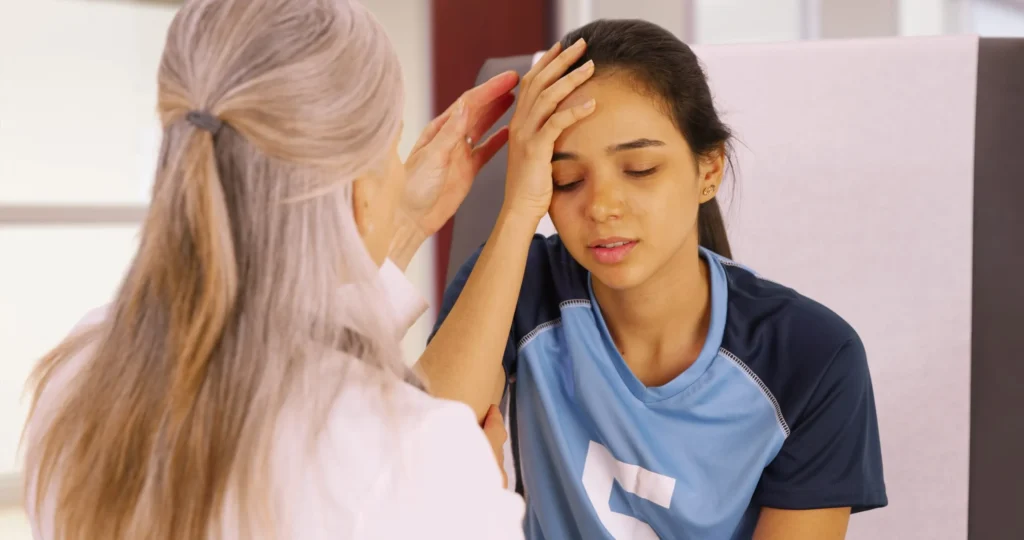
5 Myths About Concussions and the Truth You Should Know
After launching Concussion Superstars and speaking to hundreds of student-athletes, parents, coaches, and healthcare providers, I’ve noticed a common theme: there are still so many myths about concussions. These misconceptions can be dangerous, and they often delay recovery or prevent someone from getting the care they need.
So, in this blog post, I want to clear up a few of the biggest myths I hear and share the truth backed by science and lived experience.
Myth #1: “You didn’t lose consciousness, so it’s not a concussion.”
Truth: You do not need to be knocked out to have a concussion. In fact, most concussions do not involve loss of consciousness. You may experience confusion, dizziness, nausea, sensitivity to light or sound, or simply “not feeling right,” and it may still be a concussion.
Myth #2: “You can just shake it off and keep playing.”
Truth: Pushing through a concussion can make symptoms worse and increase the risk of a second, more dangerous brain injury. Recovery takes time, and rest is not a weakness. It is a smart choice for long-term health.
Myth #3: “Concussions only happen in football.”
Truth: Concussions can happen in any sport — soccer, cheerleading, basketball, wrestling, field hockey, volleyball, lacrosse, even swimming and diving. You can also get a concussion from a fall, bike accident, or even a minor car crash.
Myth #4: “If your CT scan is normal, your brain is fine.”
Truth: CT scans are great at detecting serious bleeding or swelling, but they often miss concussions, which are functional injuries, not always visible on standard imaging. That’s why diagnosis is based on symptoms and clinical evaluation, not just scans.
Myth #5: “Once you feel better, you’re good to go.”
Truth: Feeling better is a great sign, but a safe return to sports needs to be gradual and ideally guided by a medical professional. Jumping back into intense activity too soon increases the risk of long-term symptoms and future injuries.
Why This Matters
Understanding what a concussion is, and what it isn’t, helps athletes, parents, and coaches make informed decisions. It also reduces stigma around reporting symptoms, taking time off, and asking for help.
This is the type of awareness Concussion Superstars is all about. We can all play a role in keeping athletes safe and supported, both on and off the field.
Uncategorized
July 22, 2025
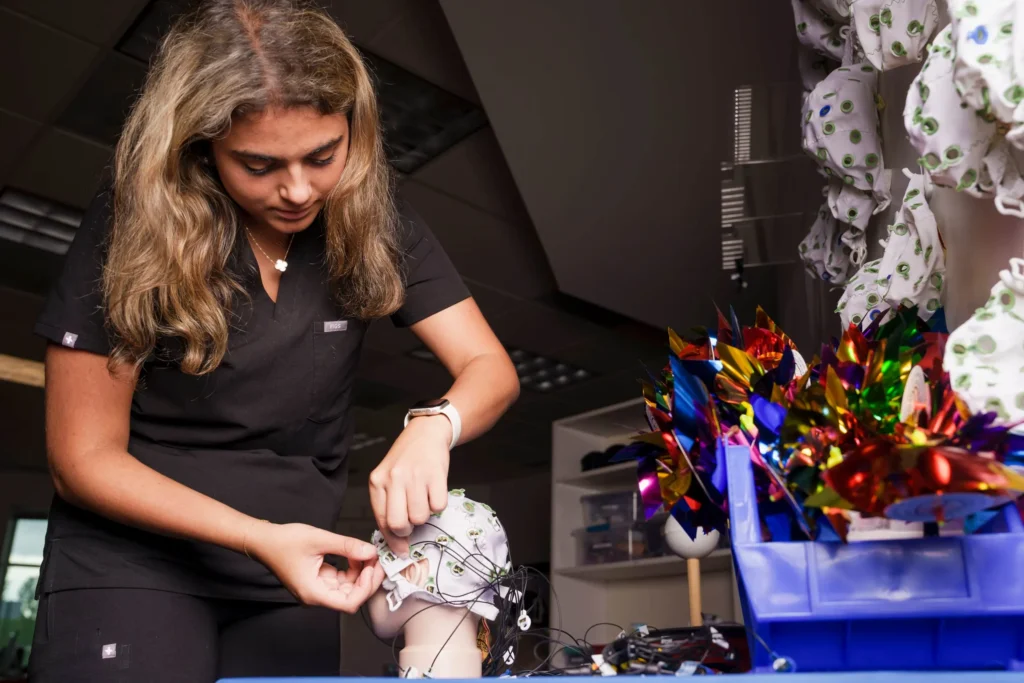
UVA Today Feature: Advancing Concussion Awareness
I’m honored to share that UVA Today recently featured my work with Concussion Superstars. I’m incredibly grateful for the opportunity to highlight a cause that continues to drive my passion and purpose: educating others about concussions and promoting brain safety, especially among young people.
This recognition reinforces the importance of community outreach, early education, and proactive advocacy in concussion awareness. I’m thankful to the UVA community for helping amplify this mission and for supporting work that aims to make a lasting impact.
You can read the full feature here:
This Hoo is ahead of the game on concussion awareness
Thank you again to UVA Today for spotlighting this initiative, and for helping to elevate the conversation around concussion education and prevention.
— Nora Fotuhi, Founder of Concussion Superstars

Uncategorized
July 1, 2025
Why I Started Concussion Superstars — and Why It Still Matters Today
Hi everyone!
I’m Nora Fotuhi, founder of Concussion Superstars. Back in 2017, I started this nonprofit with a simple but powerful mission: to raise awareness about traumatic brain injuries, especially concussions, in youth athletes. Growing up, I was always curious about the brain and how it works, which inspired me to focus on protecting it.
Why concussion awareness? Because concussions are often misunderstood and underestimated, especially in young athletes. The physical and mental impacts can be serious and long-lasting, yet many don’t get the education or support they need to recover fully.
Since founding Concussion Superstars, I’ve had the privilege of reaching thousands of people through educational pamphlets, talks, and my book. But I know there’s so much more to do, and so I plan to keep advocating for more public attention to these issues.
I want to keep spreading the message, share the latest research in an accessible way, and create a community where athletes, parents, coaches, and healthcare providers can find trustworthy information and support.
Starting this month, I’ll be posting monthly blogs sharing everything from concussion prevention tips, personal stories, new scientific insights, and ways we can all work together to make sports safer for everyone.
Stay tuned for more and feel free to reach out if you have questions or want to get involved!
– Nora Fotuhi
Stay Updated
Subscribe to receive the latest news and updates about concussion awareness and prevention.
Stay Updated
Subscribe to receive the latest news and updates about concussion awareness and prevention.